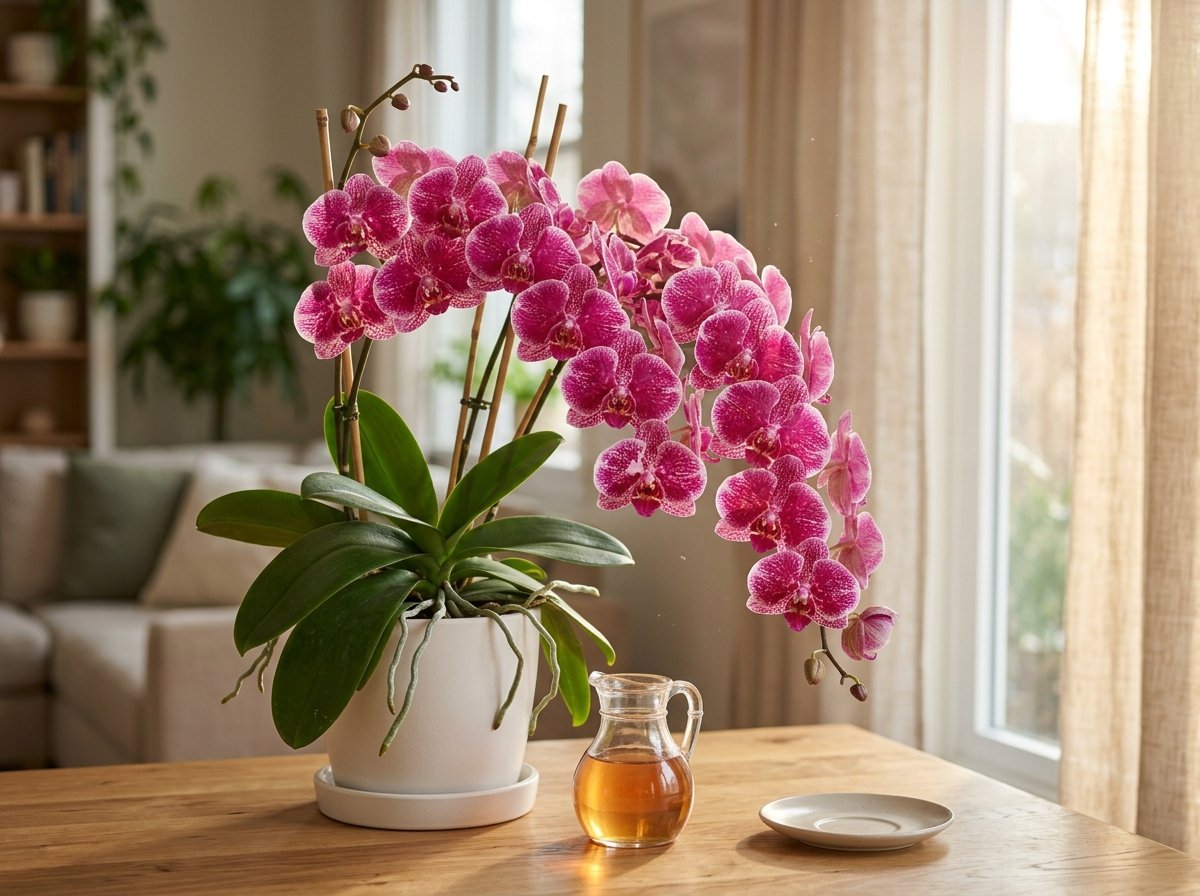
Orchids are often regarded as some of the most elegant and captivating houseplants you can grow, yet they also carry a reputation for being notoriously temperamental. Many plant lovers bring home a breathtaking, flower-covered orchid from the nursery, only to watch its blooms slowly drop after a few weeks, leaving behind stubborn green stalks that refuse to produce flowers ever again. Months or even years go by, and despite regular watering and careful placement, the plant remains completely dormant, leading many to believe that reblooming orchids requires specialized greenhouse equipment or professional horticultural skills.
The reality is that orchids are not fragile; they simply have very specific nutritional needs that standard potting fertilizers fail to satisfy. In their natural tropical habitats, wild orchids are epiphytes—meaning they do not grow in dense soil, but anchor themselves onto the bark of rainforest trees. They do not feed on heavy minerals from the ground; instead, their exposed roots absorb gentle, dilute nutrients carried by humid air, falling rainwater, and decaying organic matter trickling down the tree trunks.
When well-meaning plant owners apply potent commercial plant food or chemical spike fertilizers, the concentration of synthetic salts often scorches the orchid’s delicate, sponge-like aerial roots (the velamen). Once the roots are burned, the plant focuses all its remaining energy on survival rather than bud production.
The secret to unlocking continuous, cascading blooms all year long lies in a gentle, kitchen-made organic booster: dilute fermented rice water combined with a subtle trace of banana peel tea. This low-impact natural fertilizer provides the precise balance of potassium, phosphorus, and essential micro-minerals that orchids crave. Fed in the right manner, this technique gently shocks your dormant orchid into producing multiple robust flowering spikes packed with long-lasting buds.
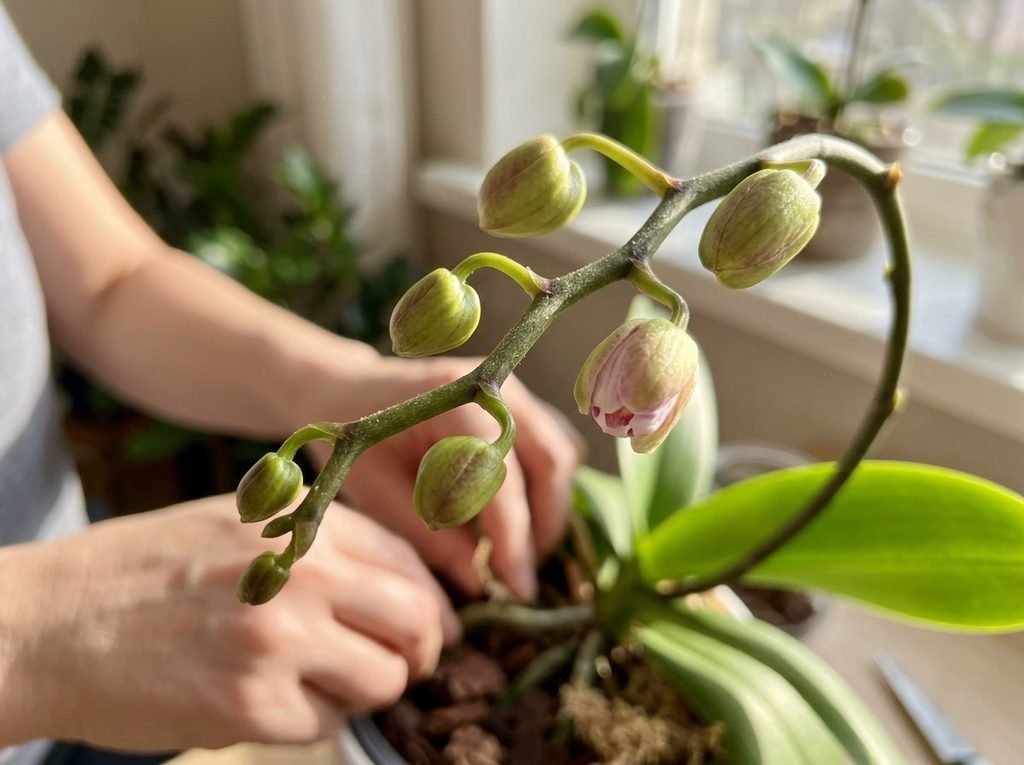
The Nutrient Powerhouse: Why This Natural Mix Works Magic
To understand why this kitchen-sourced feeding method creates an explosion of blooms, you must look at what an orchid truly requires during its vegetative and pre-flowering stages. Commercial fertilizers often contain high levels of nitrogen, which stimulates large, glossy leaves but completely suppresses flower spikes. For prolific blooming, orchids require elevated levels of potassium (K) and phosphorus (P), balanced alongside gentle micronutrients like magnesium, calcium, and B-vitamins.
Key Components of the Formula:
- Fermented Rice Water: Rice water is rich in starch, vitamin B complexes (especially thiamine and niacin), and bioavailable minerals such as iron, zinc, and magnesium. The starch serves as an immediate energy source for beneficial mycorrhizal fungi living symbiotically on orchid roots, enhancing root uptake without chemical stress.
- Banana Peel Extract (Potassium Booster): Banana skins are an exceptional organic source of potassium and phosphorus. Potassium is directly responsible for cell division in floral buds, regulating water movement, and giving petals their rich, vibrant color. When extracted gently in water, it provides a slow-release natural boost that will never burn fragile roots.
- Pure Rainwater or Distilled Water: Always avoid hard tap water chlorinated with salts and lime. Pure water acts as a clean carrier, ensuring the natural sugars and elements penetrate the root membrane smoothly.
The Problem with Synthetic Fertilizers
Traditional chemical feeds come packed with synthetic salts that gradually build up inside orchid potting medium (such as fir bark or sphagnum moss). Over time, these mineral salts crystallize, forming a crust around aerial roots that prevents moisture absorption. The tips of the roots turn black, the plant dehydrates from the inside out, and flowering stalls entirely.
By using this diluted organic formula, the nutrients remain in an easily absorbable ionic form. The orchid receives steady, low-dose micro-nutrition that mirrors the decaying leaves and rainwater washes of its native rainforest canopy, triggering an instinctual response to awaken dormant nodes and send up sturdy flower spikes.
Step-by-Step Preparation: Brewing the Natural Orchid Elixir
Preparing this blooming stimulant requires precision and patience. Because orchids have specialized aerial roots that are susceptible to root rot if exposed to unfermented sugars or heavy starches, following the proper soaking, straining, and dilution stages is essential.
1. Extracting the Rice Nutrients
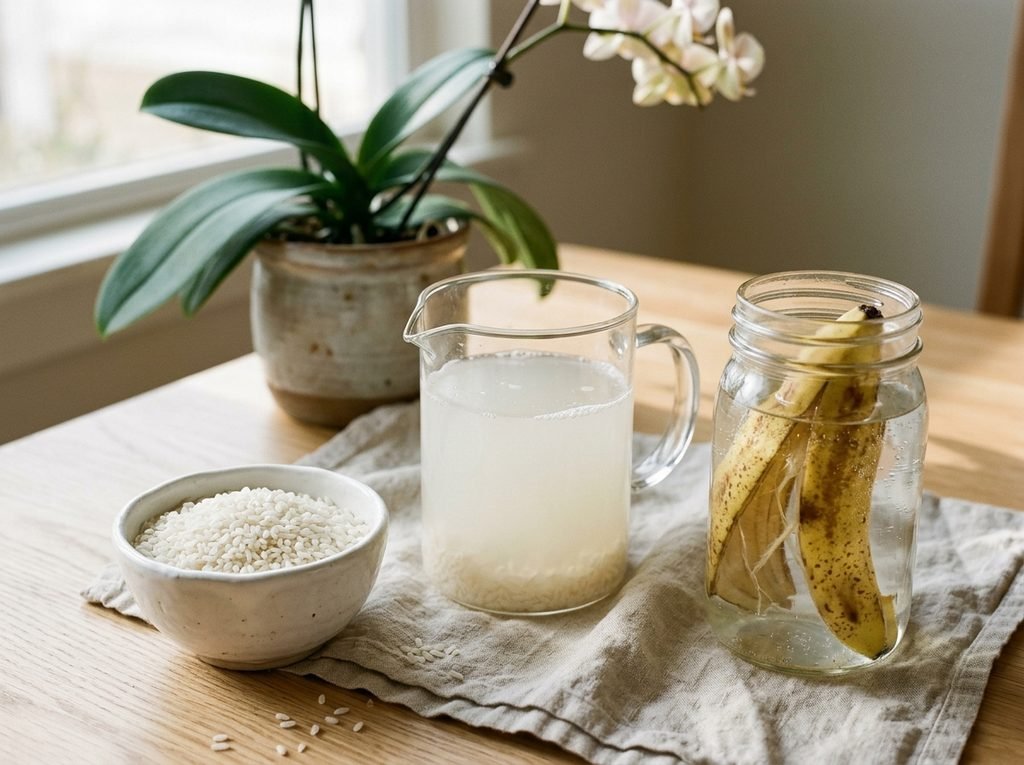
- Rinse and Soak: Take 3 tablespoons of uncooked white rice (uncooked jasmine or basmati rice works exceptionally well). Place the rice in a clean glass bowl and pour in 2 cups of room-temperature distilled or filtered water.
- Massage the Grains: Using clean fingers or a wooden spoon, gently stir and swirl the grains in the water for about 2 to 3 minutes until the water turns milky white. This mechanical motion helps release soluble vitamins, starch particles, and minerals clinging to the outer husks.
- The Light Fermentation Stage: Cover the bowl loosely with a clean cotton cloth or paper towel and let it sit at room temperature for 24 hours. A mild 24-hour fermentation lowers the pH slightly, producing lactic acid bacteria that protect orchid roots against harmful fungal pathogens while making nutrients immediately absorbable.
- Strain Thoroughly: Pour the milky liquid through a fine-mesh strainer or cheesecloth into a glass jar. Make sure no rice grains fall into the liquid; any leftover solid matter left in the orchid pot can attract mold or fruit flies.
2. Preparing the Banana Peel Extract
- Clean the Peel: Take the peel of one ripe banana (preferably organic to avoid synthetic pesticide residues) and rinse the outside under running water.
- Chop and Steep: Cut the banana skin into small squares (about 1 to 2 centimeters) to expose maximum surface area. Place the chopped pieces into a separate glass jar, pour in 2 cups of warm water, and cover it.
- Rest for 48 Hours: Allow the banana peel pieces to steep undisturbed in a shaded spot for 48 hours. The water will take on a pale amber tint as potassium, phosphorus, and organic amino acids leach directly into the water.
- Filter the Tea: Strain out every solid piece of banana peel, keeping only the nutrient-infused amber water.
3. The Final Blending & Dilution Ratio
Never apply raw, concentrated infusions directly onto an orchid’s roots. Orchids thrive on the rule of “weakly, weekly”—meaning very dilute doses given consistently.
- Combine 1 cup of your fermented rice water with 1 cup of the banana peel tea in a large watering pitcher.
- Add 2 cups of pure distilled or rainwater to dilute the blend down to a mild 1:1 ratio.
- Give the mixture a gentle stir. Your all-natural blooming elixir is now perfectly balanced and ready for feeding.

The Feeding Method: How and When to Apply the Elixir Safely
Knowing how to apply your organic fertilizer to an orchid is just as important as the formula itself. Unlike conventional potted houseplants where you simply pour water straight into the soil, orchids have exposed aerial roots and thick bark chips that demand an intentional technique. Applying liquids incorrectly can trap moisture in the leaf joints, causing devastating stem or crown rot that kills the plant within days.
The Bottom-Soaking Method (The Golden Standard)
The safest and most effective way to deliver nutrients to orchid roots is through bottom soaking (sub-irrigation):
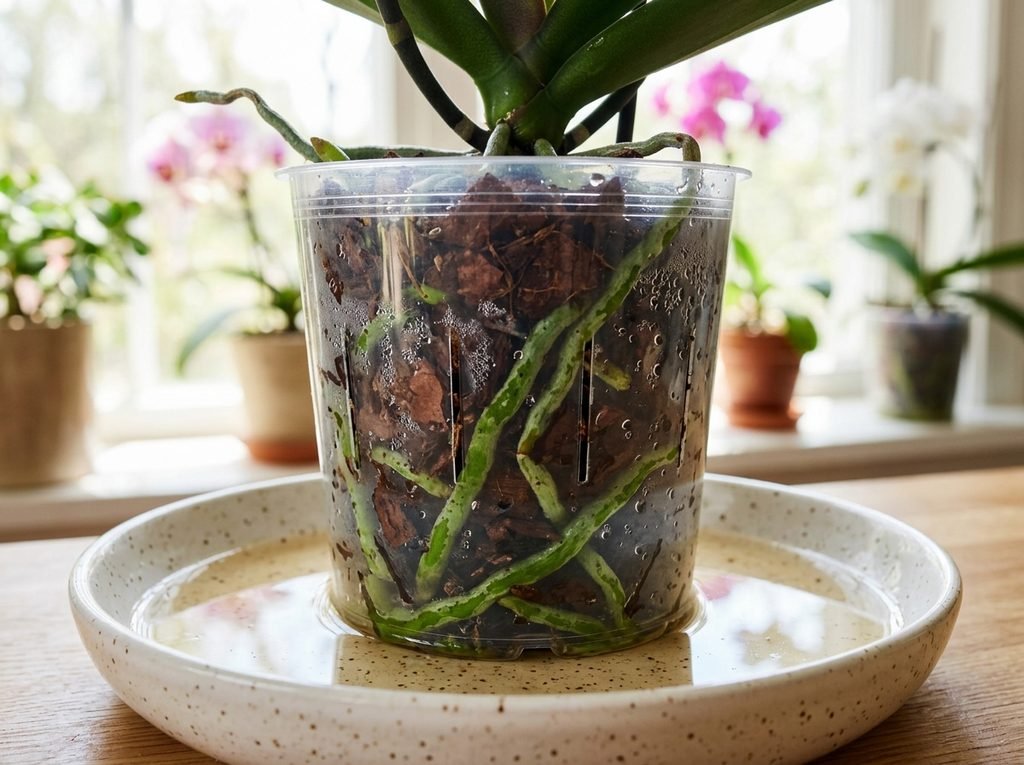
- Pre-Moisten the Roots: Never apply any fertilizer—organic or synthetic—to bone-dry, dehydrated roots. Dry velamen cells can absorb fluids too rapidly, causing physical stress. First, give your orchid pot a quick rinse with plain, room-temperature water so the roots turn from silvery-gray to a soft pale green.
- Submerge the Inner Pot: Place the plastic nursery pot (with drainage holes) inside a clean decorative bowl or basin. Pour your diluted rice-and-banana elixir into the outer container until the liquid reaches about halfway up the pot.
- Wait 10 to 15 Minutes: Allow the bark chips and bottom roots to absorb the nutrient broth via capillary action. As the roots drink, the thick outer layer turns a deep, healthy emerald green.
- Drain Thoroughly (Critical Step): Lift the plastic pot out of the liquid and hold it over a sink. Let every excess drop of fertilizer drain freely from the bottom holes for at least 5 to 10 minutes. Orchids must never sit in standing water; moisture trapped at the base blocks oxygen exchange and suffocates the root system.
Feeding Schedule for Rapid Bud Formation
- Active Growth & Spike Induction Stage: Apply this natural elixir once every two weeks. In the alternating weeks, water with plain distilled water to flush through the bark medium.
- When Flower Buds Swell: Once you see distinct buds developing along the spike and turning color, scale back feeding to once a month.
- Full Bloom Stage: When the flowers open fully into magnificent blooms, pause all feeding completely. Providing active fertilizer while the plant is in full bloom can accelerate petal drop. Resume feeding only when the blooming cycle finishes and new green leaf growth begins.
Golden Rules to Protect Your Orchid
- Never Water the Crown: Never pour liquid directly into the center of the leaves (the crown). If water accidentally splashes into the top leaves, dab it dry immediately with a clean cotton swab or paper towel.
- Avoid Cold Liquids: Always apply the solution at comfortable room temperature (between 20°C and 24°C). Shocking tropical roots with chilled water will cause developing buds to shrivel and drop off before opening (bud blast).
Environmental Triggers: How Light and Temperature Guarantee Blooms
While supplying the right organic nutrients is essential, nutrition alone functions like high-quality fuel in an engine—it still requires an environmental spark to initiate flower spikes. Orchids rely on subtle seasonal environmental signals to trigger flower production. By pairing your natural feeding method with these key lighting and temperature adjustments, you guarantee that dormant nodes burst into flower spikes with remarkable speed.
The Critical Temperature Drop (The Bloom Trigger)
In their natural tropical mountain environments, orchids experience a noticeable temperature variation between day and night before flowering season begins. Replicating this condition indoors is the most reliable trick to prompt an orchid to bloom:
- Expose to Cooler Nights: For two to three consecutive weeks during autumn or early spring, place your orchid in a spot where nighttime temperatures consistently drop to around 15°C to 18°C, while daytime temperatures hover between 21°C and 25°C.
- A Simple Window Hack: Setting your orchid near an east-facing windowsill that naturally cools down when the sun sets is usually enough to signal the plant that flowering season has arrived. Within a few weeks of this subtle temperature contrast, a firm, shiny green flower spike (often resembling a small green mitten) will emerge from between the leaf axils.
Lighting: Bright but Filtered
Orchids need ample energy to sustain dense flower heads, but their delicate foliage can easily scorch:
- Avoid Scorching Sun: Direct, hot midday sun will burn leaves, leaving bleached, papery yellow or black patches.
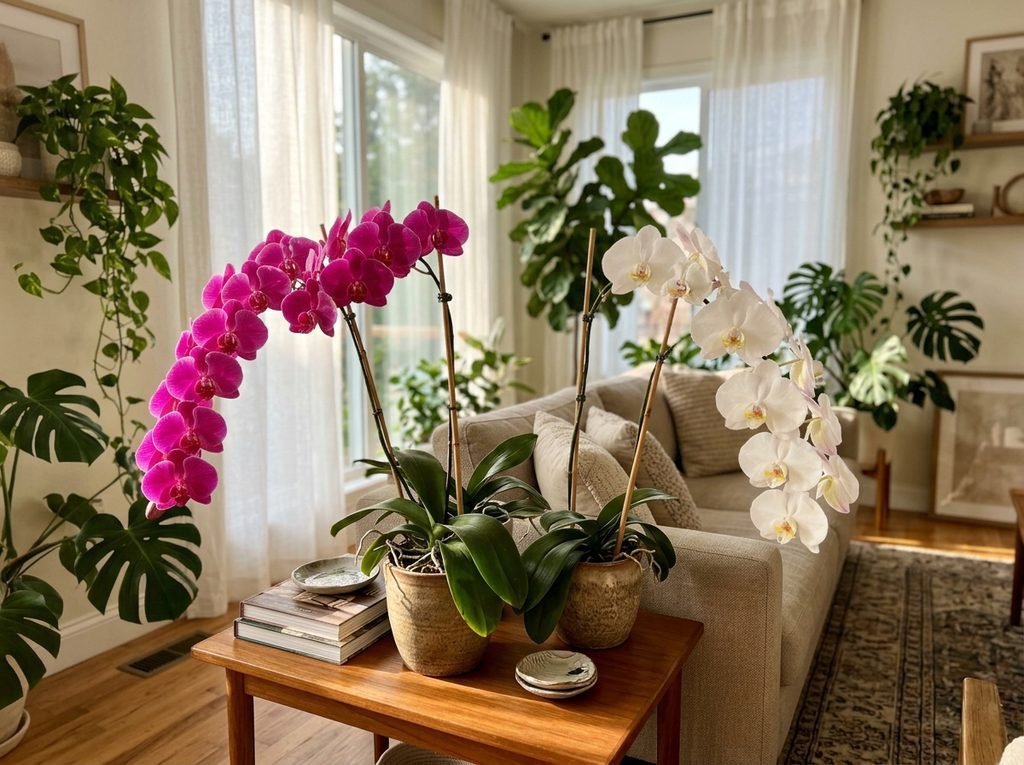
- The Ideal Exposure: An east- or southeast-facing window with sheer, gauzy curtains provides the perfect balance of intense, diffused brightness.
- Read the Leaf Color: Healthy orchid leaves should always be a vibrant light olive green. If the leaves turn dark forest green, the plant is not receiving enough light to trigger blooms. If they appear reddish-purple, the light exposure is slightly too intense.
Post-Bloom Care: Preparing for the Next Flower Cycle
When your long-lasting flowers finally begin to fade naturally after several months:
- Pruning the Spike: If the flower stem remains green and firm, trim it back just above a healthy dormant node (the small bump along the stem). Often, a secondary branch of flowers will develop right from that node. If the spike dries out and turns brown and woody, trim it cleanly down near the base of the plant using sterilized pruning shears.
- Resume the Organic Feed: Allow the orchid a brief four-week rest with regular plain watering, then resume your bi-weekly feeding of diluted fermented rice and banana peel tea. With consistent care, strong roots, and balanced organic nourishment, your orchid will reward you with continuous, breathtaking floral displays year after year.